By Konika Gayen| June 2026 | 2 Minutes Read
Summary: FSSAI has issued a fresh warning on June 6, 2026, directing all food vendors across India to immediately stop using newspapers for wrapping, packing, or serving food. The advisory followed a Mumbai incident where a vada pav vendor was caught doing exactly this, prompting a joint FSSAI-BMC inspection.
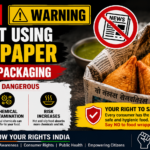
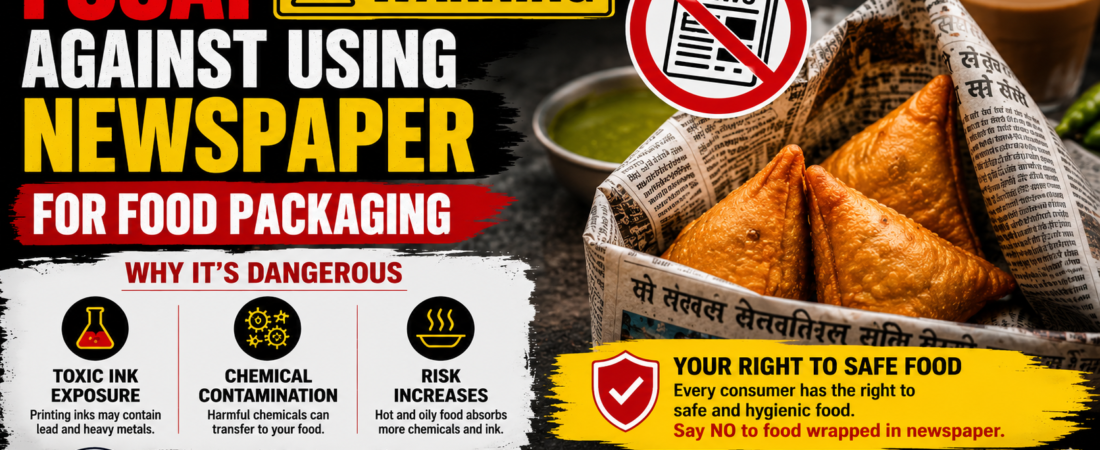
If you have ever eaten samosas, vada pav, pakoras, or fried snacks wrapped in a sheet of old newspaper, you are not alone. This practice is so common across India that it barely raises an eyebrow. But on June 6, 2026, the Food Safety and Standards Authority of India (FSSAI) issued a fresh and urgent warning — one that every consumer and food vendor in the country needs to take seriously.
Newspaper wrapping of food is not just unhygienic — it is illegal under Indian law, and FSSAI has now made that crystal clear.
What Triggered the Warning?
The immediate trigger was a case in Mumbai, where a well-known vada pav vendor was found using newspapers to pack and serve food to customers. Following the incident, FSSAI’s Western Region office and the Brihanmumbai Municipal Corporation (BMC) conducted a joint inspection and took action against the vendor.
However, FSSAI made it clear that this warning extends far beyond one vendor in Mumbai. The advisory applies to all food businesses and vendors across India, and authorities intend to prevent similar practices from continuing across cities and towns.
Why Is Newspaper Wrapping Dangerous?
FSSAI’s warning is backed by solid scientific reasoning. Here is what makes newspaper contact with food genuinely dangerous:
Toxic Printing Ink: Newspaper printing inks contain a cocktail of harmful chemicals — pigments, binders, solvents, and heavy metals including lead. When food — especially hot or oily food — comes in contact with the paper, these substances leach directly into what you eat.
Heavy Metal Contamination: Lead and other heavy metals found in printing inks are known to cause serious chronic health problems, including neurological damage, kidney disease, and developmental issues in children, with prolonged exposure.
Pathogen Risk: Newspapers pass through many hands before reaching a vendor or consumer — printing presses, distributors, delivery agents, and readers. By the time they are used to wrap your food, they may already be carrying bacteria, viruses, or other pathogens picked up from unsanitary surfaces.
Accelerated Absorption with Heat and Oil: Hot food and oily food are the worst combinations with newspaper. Heat and fat significantly speed up the rate at which ink chemicals are absorbed into food, dramatically increasing the amount of harmful substances you consume.
What Does the Law Say?
This is not a new advisory from FSSAI. The legal prohibition on newspaper food packaging has existed for years. The Food Safety and Standards (Packaging) Regulations, 2018 explicitly prohibit the use of newspapers, or any similar non-approved material, for storing, wrapping, or serving food.
In other words, every food vendor who wraps your samosa, chaat, or vada pav in a newspaper is violating a legally binding food safety regulation — not just a health guideline.
FSSAI has directed all food businesses to use only safe, food-grade packaging materials that are approved under food safety rules.
Who Does This Apply To?
FSSAI’s directive is comprehensive and covers every type of food business in India:
Street food vendors and hawkers
Restaurants and dhabas
Cloud kitchens
Caterers
Quick Service Restaurants (QSRs)
Mobile food vendors
Petty retailers and kiosks
Importantly, FSSAI clarified that newspapers should not be used at any stage of food handling — not to absorb excess oil from fried items, not to cover food, and not to wrap finished products.
What Should Consumers Do?
FSSAI has urged consumers to stay alert and take the following steps:
Do not buy food that is served or wrapped in newspaper — even if it is from a vendor you trust.
Politely ask the vendor to use food-grade packaging alternatives like butter paper, food-grade paper bags, or approved containers.
If you observe a vendor using newspaper wrapping, you can report it to FSSAI through its consumer helpline or the Food Safety Connect app.
Spread awareness among family members, especially elderly relatives who may consider this a harmless old habit.
Safe Alternatives for Food Vendors
Vendors who have used newspapers out of convenience or habit have affordable, approved alternatives available:
- Food-grade butter paper or grease-proof paper.
- Approved brown paper bags.
- Food-safe plastic or biodegradable containers.
- Leaf-based packaging (e.g., sal leaves, banana leaves) — a traditional and fully safe option
Eating food wrapped in newspaper may feel like a normal part of Indian street food culture, but it carries real health risks that accumulate over time. Lead and chemical contamination from printing ink is not visible, has no smell, and causes no immediate discomfort — which is precisely what makes it dangerous.
FSSAI’s June 2026 warning is a reminder that food safety laws in India are not suggestions — they are enforceable regulations. Both vendors who violate them and consumers who accept sub-standard food packaging have a role to play in making India’s street food ecosystem safer.
The next time a vendor offers you food in newspaper, you have every right — and every reason — to say no.
Write Feedback
Read More….
- Can a Doctor Lose Their License for What They Say at a Comedy Show?
- Rights of Content Creators in India: What the Law Protects — and What It Doesn’t

- DIGITAL PERSONAL DATA PROTECTION ACT, 2023

- RIGHT TO PRIVACY IN INDIA

- Stop Eating Newspaper-Wrapped Food: FSSAI Issues Fresh Warning After Mumbai Vada Pav Incident